973.228.9898

Did an Integra DuraFlex Dural Graft Tear, Thin, Dissolve, or Develop a Hole?

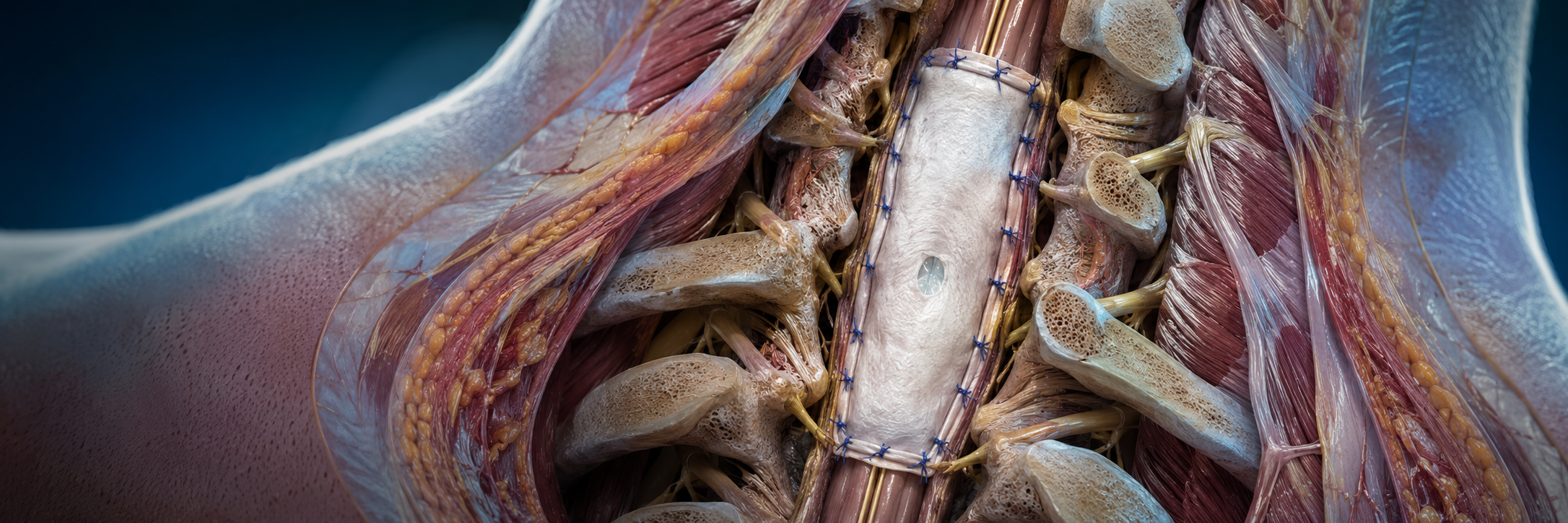
Mazie Slater Katz & Freeman is investigating potential claims involving patients who suffered cerebrospinal-fluid leaks, graft deterioration, repeat hospitalization, or revision surgery after implantation of an Integra DuraFlex Suturable Dural Graft.

Reports submitted to the FDA describe DuraFlex grafts that allegedly developed marked thinning, easy tearing, central holes, deterioration, or dissolution. Some patients reportedly required additional surgery to repair a cerebrospinal-fluid leak or replace the graft. These reports do not, by themselves, establish that DuraFlex caused an injury or that every DuraFlex graft is defective. They do identify a pattern that warrants careful investigation.

Were you or a family member affected?

You should consider requesting a case review if:

  • A DuraFlex graft was implanted during brain, spinal, Chiari-malformation, tumor, or other neurosurgery;
  • You later developed a cerebrospinal-fluid leak or recurrent fluid collection;
  • Your surgeon found a hole, tear, thinning, friability, deterioration, or dissolution of the graft;
  • The graft failed in its middle or interior rather than only at the suture line;
  • You required revision surgery, drainage, shunting, hospitalization, or graft replacement; or
  • You were told that the dural graft did not heal, incorporate, or maintain its integrity as expected.

You do not need to know the model number or lot number before contacting us. We can help determine what product was implanted by reviewing the hospital’s implant records.


Why DuraFlex Graft Failures Are Being Investigated

The dura mater is the membrane that protects the brain and spinal cord and helps contain cerebrospinal fluid. When the dura is opened or damaged during surgery, a surgeon may implant a graft to close or repair the defect.

Integra describes DuraFlex as a natural, resorbable, collagen-based graft derived from bovine pericardium and intended to serve as a substitute for the repair of the dura mater. The product must be sutured into place.

Integra has promoted DuraFlex as a graft designed to:

  • Retain mechanical strength and elasticity;
  • Stretch when hydrated;
  • Support host-tissue ingrowth;
  • Conform to complex dural surfaces; and
  • Assist in creating a barrier against cerebrospinal-fluid leakage.

Our investigation concerns whether some DuraFlex grafts may have lost their structural integrity too soon, before the patient’s own tissue could provide an adequate and durable closure.

A routine surgical complication and a defective graft are not necessarily the same thing. The location and physical appearance of the failure can be critical. A revision surgeon’s finding of a hole in the middle of the graft, marked thinning, easy tearing, friability, or apparent dissolution—particularly where the graft edges or suture line remained sealed—may justify a product-focused investigation.


What Has Been Reported to the FDA?

The FDA’s public adverse-event database contains reports involving DuraFlex and related Integra bovine-pericardium dural grafts.

Examples include:

Hole in the center while the graft edges remained sealed

One FDA report states that a patient underwent surgery to correct a postoperative cerebrospinal-fluid leak. During the revision procedure, the surgeon reportedly found a hole in the middle of the DuraFlex graft even though the edges had sealed properly. The event was coded as a serious injury and material disintegration.

Marked thinning and easy tearing

Another report involving model BP10405 described deterioration near the suture line, focal dural dehiscence, marked thinning, and easy tearing of the surrounding graft material. The patient reportedly required hospitalization and additional intervention.

Grafts reportedly thinning or dissolving in the middle

A 2023 report described a patient whose first DuraFlex graft allegedly thinned and dissolved in the middle. A second DuraFlex graft reportedly weakened in its middle during implantation, and a third reportedly dissolved centrally and was explanted. The manufacturer identified a number of possible patient, surgical, and postoperative explanations and stated that an external cause was more plausible based on the information available.

These reports are significant enough to investigate, but they must be interpreted carefully. The FDA explains that adverse-event reports may be incomplete, inaccurate, unverified, duplicative, or affected by reporting bias. The reports cannot establish how frequently an event occurs and do not prove that a medical device caused a particular injury.


Signs That a DuraFlex Case May Require Further Investigation

A product-liability review may be appropriate when the medical records document one or more of the following:

Physical findings involving the graft

  • A central or interior hole;
  • Thinning of the graft;
  • A paper-thin, fragile, or friable appearance;
  • Tearing with minimal handling;
  • Linear tears or ruptures;
  • Material deterioration or disintegration;
  • The graft falling apart during revision surgery;
  • Apparent premature resorption or dissolution;
  • A defect away from the suture line; or
  • Sealed graft edges with failure in the graft’s body.

Resulting medical complications

  • Cerebrospinal-fluid leakage;
  • Pseudomeningocele or recurrent fluid collection;
  • Wound dehiscence or persistent wound drainage;
  • Repeat hospitalization;
  • Placement of a lumbar drain or other drainage device;
  • Shunt placement;
  • Revision dural-repair surgery;
  • Removal or replacement of the graft;
  • Infection associated with the failed closure; or
  • Additional neurological or surgical complications resulting from the leak or revision procedures.

Not every patient with one of these complications has a valid product-liability claim. The firm must review the medical records, operative technique, location of the failure, timing, infection history, intracranial or spinal-fluid pressure, patient risk factors, and possible alternative causes.


The Revision Operative Report May Be the Most Important Record

In many cases, the original postoperative diagnosis will simply say “CSF leak,” “pseudomeningocele,” or “wound complication.” Those terms do not reveal why the closure failed.

The revision operative report may state whether the surgeon actually saw:

  • A hole in the middle of the graft;
  • Thinning or deterioration;
  • A tear away from the sutures;
  • A graft that was dissolving or falling apart;
  • An intact suture line;
  • Properly sealed graft margins;
  • Infection or purulent material;
  • Excessive tension;
  • A technical failure at the graft–dura interface; or
  • No apparent surgical explanation for the graft’s condition.

A central defect with intact edges may present a very different product-liability question from a leak caused by a loose suture or inadequate overlap.


How Can I Find Out Whether DuraFlex Was Implanted?

Patients are often not told the brand or lot number of every surgical product used during an operation.

The identity of the graft may appear in:

  • The hospital’s implant log;
  • The intraoperative nursing record;
  • The surgeon’s operative report;
  • A product-identification sticker in the chart;
  • The hospital’s materials-management record;
  • The implant card;
  • Billing or supply records;
  • The revision operative report; or
  • A manufacturer complaint or adverse-event report.

Relevant descriptions may include:

  • “Integra DuraFlex”;
  • “DuraFlex Suturable Dural Graft”;
  • “Integra BP dural graft”;
  • “Bovine pericardium dural graft”;
  • “BP10405” or another BP model number;
  • “Tutogen”;
  • “RTI Surgical”; or
  • A DuraFlex lot or tissue-identification number.

Do not assume that a generic reference to a “dural patch” identifies the product. The implant log and product sticker usually provide more reliable identification.


What Information Will the Firm Review?

Our preliminary DuraFlex review may consider:

  1. The implanted product. Was it DuraFlex, another Integra graft, or a different manufacturer’s product?
  2. The model and lot. Are the catalog number, tissue-identification number, lot number, or implant sticker available?
  3. The timing. How long after implantation did the leak, deterioration, or revision occur?
  4. The failure location. Was the defect in the graft’s center, near its edge, at a suture hole, or at the native-dura interface?
  5. The graft’s appearance. Did the surgeon describe thinning, friability, tearing, dissolution, deterioration, or disintegration?
  6. The surgical technique. Was there adequate overlap, appropriate orientation, proper hydration, tension-free placement, and suitable suturing?
  7. Alternative causes. Was there an infection, elevated pressure, coughing, vomiting, sneezing, trauma, poor wound healing, steroid use, diabetes, smoking, or another potential explanation?
  8. The resulting harm. Did the patient require hospitalization, revision surgery, graft replacement, drainage, shunting, prolonged treatment, or suffer lasting injuries?
  9. Available physical evidence. Was the explanted graft preserved, photographed, submitted to pathology, or returned to the manufacturer?

A strong review does not merely ask whether a CSF leak occurred. It asks why the closure failed and what the surgeon actually observed.


Preserve Evidence Before It Is Lost

When possible, patients and families should preserve or request:

  • The original operative report;
  • The complete implant log;
  • The product sticker and lot information;
  • The revision operative report;
  • Intraoperative photographs or video;
  • Imaging showing the fluid collection or leak;
  • Pathology reports;
  • Hospital risk-management communications;
  • Manufacturer complaint correspondence;
  • Records showing whether the graft was returned or discarded; and
  • The explanted graft itself, if it remains available.

Patients should not personally handle or attempt to retrieve biological material. Any preservation request should be directed through the appropriate hospital, pathology department, treating provider, or legal process.

Evidence can be discarded as part of routine hospital practice. Early investigation may therefore be important even when the patient has not yet decided whether to pursue a claim.


What If My Surgeon Called It a Known Complication?

Cerebrospinal-fluid leakage is a recognized potential complication of dural surgery. The DuraFlex instructions also identify cerebrospinal-fluid leakage and surgical-site dehiscence among possible adverse reactions.

That does not necessarily answer why a particular leak occurred.

A leak may result from:

  • The underlying medical condition;
  • The surgical procedure;
  • Suturing or placement;
  • Infection;
  • Elevated cerebrospinal-fluid pressure;
  • Patient-specific healing factors;
  • Postoperative mechanical stress;
  • Another product used during surgery; or
  • A problem with the graft itself.

Our investigation focuses on distinguishing an expected surgical risk from evidence of premature material-integrity failure.


What If There Has Not Been a DuraFlex Recall?

This investigation is not based on a representation that the FDA has recalled DuraFlex or formally declared it defective.

A case review instead considers:

  • The patient’s particular graft;
  • What happened to it;
  • The revision surgeon’s observations;
  • Whether the product performed as represented;
  • Whether the risk was adequately disclosed;
  • Whether the graft complied with applicable specifications; and
  • Whether a defect or inadequate warning contributed to the patient’s injuries.

Recall status is one consideration, but our evaluation does not depend on recall status alone.


Why Choose Mazie Slater Katz & Freeman?

Medical-device cases require more than proof that a patient experienced a bad result. They require product identification, preservation of physical evidence, review by qualified medical and engineering experts, analysis of regulatory records, and the ability to take on a sophisticated corporate defendant.

Mazie Slater Katz & Freeman represents injured patients in complex product-liability, defective-medical-device, medical-malpractice, and other serious civil cases. The firm’s attorneys have experience litigating difficult cases against major manufacturers and taking cases through trial.

Our investigation may include:

  • Obtaining the complete hospital and implant records;
  • Confirming the exact product, model, and lot;
  • Reviewing the original and revision operative reports;
  • Consulting neurosurgical and biomaterials experts;
  • Evaluating FDA and manufacturer records;
  • Seeking preservation of the explanted graft;
  • Investigating other reports involving the same product or lot; and
  • Determining what claims may be available under applicable law.

Start With Clarity

You do not need to determine for yourself whether the graft was defective. Tell us what happened, and we will evaluate whether the medical and product evidence warrants further investigation.


Frequently Asked Questions

Do I need proof that DuraFlex was implanted before contacting the firm?

No. Tell us the hospital, surgeon, surgery date, and type of procedure. The product may be identifiable through the implant log, intraoperative record, billing record, or product sticker.

Does an FDA report prove that DuraFlex caused my injury?

No. FDA adverse-event reports are signals for investigation, not findings of legal or medical causation. The FDA cautions that reports may be incomplete or unverified and cannot establish an event rate. Each potential case must be independently evaluated.

What if my graft was not removed?

A claim may still be investigated. Medical records, imaging, operative findings, surgeon testimony, and the clinical course may provide relevant evidence. A preserved explant can be valuable, but it is not the only possible source of proof.

What if the hospital discarded the graft?

Contact the firm promptly. We can determine whether photographs, pathology material, retained samples, manufacturer correspondence, or other evidence exists.

What if infection was also present?

Infection can complicate the medical and legal analysis, but it does not automatically eliminate a potential case. The timing of the infection, condition of the graft, organism involved, surgical findings, and sequence of events must be examined.

What if the hole was close to the suture line?

A suture-line failure can have several possible causes, including technique, tension, graft handling, healing problems, mechanical stress, or material weakness. The operative report and expert review will be important.

Is there a deadline for bringing a claim?

Yes. Legal deadlines vary by state and by the circumstances of the case. Some deadlines may begin before a patient knows the full cause of the injury. Prompt review is important because both legal rights and physical evidence can be lost.

Should I wait until my medical treatment is finished?

You do not have to delay an initial legal review. Continuing treatment and protecting legal rights can occur at the same time. Medical decisions should be made with your treating healthcare providers, not based on information on this webpage.

Did an Integra DuraFlex Dural Graft Tear, Thin, Dissolve, or Develop a Hole?

Mazie Slater Katz & Freeman is investigating potential claims involving patients who suffered cerebrospinal-fluid leaks, graft deterioration, repeat hospitalization, or revision surgery after implantation of an Integra DuraFlex Suturable Dural Graft.

Reports submitted to the FDA describe DuraFlex grafts that allegedly developed marked thinning, easy tearing, central holes, deterioration, or dissolution. Some patients reportedly required additional surgery to repair a cerebrospinal-fluid leak or replace the graft. These reports do not, by themselves, establish that DuraFlex caused an injury or that every DuraFlex graft is defective. They do identify a pattern that warrants careful investigation.

Were you or a family member affected?

You should consider requesting a case review if:

  • A DuraFlex graft was implanted during brain, spinal, Chiari-malformation, tumor, or other neurosurgery;
  • You later developed a cerebrospinal-fluid leak or recurrent fluid collection;
  • Your surgeon found a hole, tear, thinning, friability, deterioration, or dissolution of the graft;
  • The graft failed in its middle or interior rather than only at the suture line;
  • You required revision surgery, drainage, shunting, hospitalization, or graft replacement; or
  • You were told that the dural graft did not heal, incorporate, or maintain its integrity as expected.

You do not need to know the model number or lot number before contacting us. We can help determine what product was implanted by reviewing the hospital’s implant records.


Why DuraFlex Graft Failures Are Being Investigated

The dura mater is the membrane that protects the brain and spinal cord and helps contain cerebrospinal fluid. When the dura is opened or damaged during surgery, a surgeon may implant a graft to close or repair the defect.

Integra describes DuraFlex as a natural, resorbable, collagen-based graft derived from bovine pericardium and intended to serve as a substitute for the repair of the dura mater. The product must be sutured into place.

Integra has promoted DuraFlex as a graft designed to:

  • Retain mechanical strength and elasticity;
  • Stretch when hydrated;
  • Support host-tissue ingrowth;
  • Conform to complex dural surfaces; and
  • Assist in creating a barrier against cerebrospinal-fluid leakage.

Our investigation concerns whether some DuraFlex grafts may have lost their structural integrity too soon, before the patient’s own tissue could provide an adequate and durable closure.

A routine surgical complication and a defective graft are not necessarily the same thing. The location and physical appearance of the failure can be critical. A revision surgeon’s finding of a hole in the middle of the graft, marked thinning, easy tearing, friability, or apparent dissolution—particularly where the graft edges or suture line remained sealed—may justify a product-focused investigation.


What Has Been Reported to the FDA?

The FDA’s public adverse-event database contains reports involving DuraFlex and related Integra bovine-pericardium dural grafts.

Examples include:

Hole in the center while the graft edges remained sealed

One FDA report states that a patient underwent surgery to correct a postoperative cerebrospinal-fluid leak. During the revision procedure, the surgeon reportedly found a hole in the middle of the DuraFlex graft even though the edges had sealed properly. The event was coded as a serious injury and material disintegration.

Marked thinning and easy tearing

Another report involving model BP10405 described deterioration near the suture line, focal dural dehiscence, marked thinning, and easy tearing of the surrounding graft material. The patient reportedly required hospitalization and additional intervention.

Grafts reportedly thinning or dissolving in the middle

A 2023 report described a patient whose first DuraFlex graft allegedly thinned and dissolved in the middle. A second DuraFlex graft reportedly weakened in its middle during implantation, and a third reportedly dissolved centrally and was explanted. The manufacturer identified a number of possible patient, surgical, and postoperative explanations and stated that an external cause was more plausible based on the information available.

These reports are significant enough to investigate, but they must be interpreted carefully. The FDA explains that adverse-event reports may be incomplete, inaccurate, unverified, duplicative, or affected by reporting bias. The reports cannot establish how frequently an event occurs and do not prove that a medical device caused a particular injury.


Signs That a DuraFlex Case May Require Further Investigation

A product-liability review may be appropriate when the medical records document one or more of the following:

Physical findings involving the graft

  • A central or interior hole;
  • Thinning of the graft;
  • A paper-thin, fragile, or friable appearance;
  • Tearing with minimal handling;
  • Linear tears or ruptures;
  • Material deterioration or disintegration;
  • The graft falling apart during revision surgery;
  • Apparent premature resorption or dissolution;
  • A defect away from the suture line; or
  • Sealed graft edges with failure in the graft’s body.

Resulting medical complications

  • Cerebrospinal-fluid leakage;
  • Pseudomeningocele or recurrent fluid collection;
  • Wound dehiscence or persistent wound drainage;
  • Repeat hospitalization;
  • Placement of a lumbar drain or other drainage device;
  • Shunt placement;
  • Revision dural-repair surgery;
  • Removal or replacement of the graft;
  • Infection associated with the failed closure; or
  • Additional neurological or surgical complications resulting from the leak or revision procedures.

Not every patient with one of these complications has a valid product-liability claim. The firm must review the medical records, operative technique, location of the failure, timing, infection history, intracranial or spinal-fluid pressure, patient risk factors, and possible alternative causes.


The Revision Operative Report May Be the Most Important Record

In many cases, the original postoperative diagnosis will simply say “CSF leak,” “pseudomeningocele,” or “wound complication.” Those terms do not reveal why the closure failed.

The revision operative report may state whether the surgeon actually saw:

  • A hole in the middle of the graft;
  • Thinning or deterioration;
  • A tear away from the sutures;
  • A graft that was dissolving or falling apart;
  • An intact suture line;
  • Properly sealed graft margins;
  • Infection or purulent material;
  • Excessive tension;
  • A technical failure at the graft–dura interface; or
  • No apparent surgical explanation for the graft’s condition.

A central defect with intact edges may present a very different product-liability question from a leak caused by a loose suture or inadequate overlap.


How Can I Find Out Whether DuraFlex Was Implanted?

Patients are often not told the brand or lot number of every surgical product used during an operation.

The identity of the graft may appear in:

  • The hospital’s implant log;
  • The intraoperative nursing record;
  • The surgeon’s operative report;
  • A product-identification sticker in the chart;
  • The hospital’s materials-management record;
  • The implant card;
  • Billing or supply records;
  • The revision operative report; or
  • A manufacturer complaint or adverse-event report.

Relevant descriptions may include:

  • “Integra DuraFlex”;
  • “DuraFlex Suturable Dural Graft”;
  • “Integra BP dural graft”;
  • “Bovine pericardium dural graft”;
  • “BP10405” or another BP model number;
  • “Tutogen”;
  • “RTI Surgical”; or
  • A DuraFlex lot or tissue-identification number.

Do not assume that a generic reference to a “dural patch” identifies the product. The implant log and product sticker usually provide more reliable identification.


What Information Will the Firm Review?

Our preliminary DuraFlex review may consider:

  1. The implanted product. Was it DuraFlex, another Integra graft, or a different manufacturer’s product?
  2. The model and lot. Are the catalog number, tissue-identification number, lot number, or implant sticker available?
  3. The timing. How long after implantation did the leak, deterioration, or revision occur?
  4. The failure location. Was the defect in the graft’s center, near its edge, at a suture hole, or at the native-dura interface?
  5. The graft’s appearance. Did the surgeon describe thinning, friability, tearing, dissolution, deterioration, or disintegration?
  6. The surgical technique. Was there adequate overlap, appropriate orientation, proper hydration, tension-free placement, and suitable suturing?
  7. Alternative causes. Was there an infection, elevated pressure, coughing, vomiting, sneezing, trauma, poor wound healing, steroid use, diabetes, smoking, or another potential explanation?
  8. The resulting harm. Did the patient require hospitalization, revision surgery, graft replacement, drainage, shunting, prolonged treatment, or suffer lasting injuries?
  9. Available physical evidence. Was the explanted graft preserved, photographed, submitted to pathology, or returned to the manufacturer?

A strong review does not merely ask whether a CSF leak occurred. It asks why the closure failed and what the surgeon actually observed.


Preserve Evidence Before It Is Lost

When possible, patients and families should preserve or request:

  • The original operative report;
  • The complete implant log;
  • The product sticker and lot information;
  • The revision operative report;
  • Intraoperative photographs or video;
  • Imaging showing the fluid collection or leak;
  • Pathology reports;
  • Hospital risk-management communications;
  • Manufacturer complaint correspondence;
  • Records showing whether the graft was returned or discarded; and
  • The explanted graft itself, if it remains available.

Patients should not personally handle or attempt to retrieve biological material. Any preservation request should be directed through the appropriate hospital, pathology department, treating provider, or legal process.

Evidence can be discarded as part of routine hospital practice. Early investigation may therefore be important even when the patient has not yet decided whether to pursue a claim.


What If My Surgeon Called It a Known Complication?

Cerebrospinal-fluid leakage is a recognized potential complication of dural surgery. The DuraFlex instructions also identify cerebrospinal-fluid leakage and surgical-site dehiscence among possible adverse reactions.

That does not necessarily answer why a particular leak occurred.

A leak may result from:

  • The underlying medical condition;
  • The surgical procedure;
  • Suturing or placement;
  • Infection;
  • Elevated cerebrospinal-fluid pressure;
  • Patient-specific healing factors;
  • Postoperative mechanical stress;
  • Another product used during surgery; or
  • A problem with the graft itself.

Our investigation focuses on distinguishing an expected surgical risk from evidence of premature material-integrity failure.


What If There Has Not Been a DuraFlex Recall?

This investigation is not based on a representation that the FDA has recalled DuraFlex or formally declared it defective.

A case review instead considers:

  • The patient’s particular graft;
  • What happened to it;
  • The revision surgeon’s observations;
  • Whether the product performed as represented;
  • Whether the risk was adequately disclosed;
  • Whether the graft complied with applicable specifications; and
  • Whether a defect or inadequate warning contributed to the patient’s injuries.

Recall status is one consideration, but our evaluation does not depend on recall status alone.


Why Choose Mazie Slater Katz & Freeman?

Medical-device cases require more than proof that a patient experienced a bad result. They require product identification, preservation of physical evidence, review by qualified medical and engineering experts, analysis of regulatory records, and the ability to take on a sophisticated corporate defendant.

Mazie Slater Katz & Freeman represents injured patients in complex product-liability, defective-medical-device, medical-malpractice, and other serious civil cases. The firm’s attorneys have experience litigating difficult cases against major manufacturers and taking cases through trial.

Our investigation may include:

  • Obtaining the complete hospital and implant records;
  • Confirming the exact product, model, and lot;
  • Reviewing the original and revision operative reports;
  • Consulting neurosurgical and biomaterials experts;
  • Evaluating FDA and manufacturer records;
  • Seeking preservation of the explanted graft;
  • Investigating other reports involving the same product or lot; and
  • Determining what claims may be available under applicable law.

Start With Clarity

You do not need to determine for yourself whether the graft was defective. Tell us what happened, and we will evaluate whether the medical and product evidence warrants further investigation.


Frequently Asked Questions

Do I need proof that DuraFlex was implanted before contacting the firm?

No. Tell us the hospital, surgeon, surgery date, and type of procedure. The product may be identifiable through the implant log, intraoperative record, billing record, or product sticker.

Does an FDA report prove that DuraFlex caused my injury?

No. FDA adverse-event reports are signals for investigation, not findings of legal or medical causation. The FDA cautions that reports may be incomplete or unverified and cannot establish an event rate. Each potential case must be independently evaluated.

What if my graft was not removed?

A claim may still be investigated. Medical records, imaging, operative findings, surgeon testimony, and the clinical course may provide relevant evidence. A preserved explant can be valuable, but it is not the only possible source of proof.

What if the hospital discarded the graft?

Contact the firm promptly. We can determine whether photographs, pathology material, retained samples, manufacturer correspondence, or other evidence exists.

What if infection was also present?

Infection can complicate the medical and legal analysis, but it does not automatically eliminate a potential case. The timing of the infection, condition of the graft, organism involved, surgical findings, and sequence of events must be examined.

What if the hole was close to the suture line?

A suture-line failure can have several possible causes, including technique, tension, graft handling, healing problems, mechanical stress, or material weakness. The operative report and expert review will be important.

Is there a deadline for bringing a claim?

Yes. Legal deadlines vary by state and by the circumstances of the case. Some deadlines may begin before a patient knows the full cause of the injury. Prompt review is important because both legal rights and physical evidence can be lost.

Should I wait until my medical treatment is finished?

You do not have to delay an initial legal review. Continuing treatment and protecting legal rights can occur at the same time. Medical decisions should be made with your treating healthcare providers, not based on information on this webpage.

Read More
Watch Our Attorneys

On Television and in Court

View All Media Media Networks